Putin: Gangster’s Paradise

Putin the Gangster

In the shadows of the Kremlin, where the cold winds bite,
A man stands tall, casting fear in the night.
With a poker face, cold as Siberian snow,
He plays the game, where only the strong will grow.

No crown, no throne, but a power supreme,
Behind iron curtains, in the halls of a dream.
He moves like a shadow, with the heart of a king,
A gangster in a suit, pulling every string.

Whispers of deals in the underground glow,
The oligarchs bend low, and the soldiers row.
With a smirk, he decides what’s won and lost,
A chessboard of nations, at any cost.

A deal with the devil? Maybe just a plan,
A mind sharp as knives, but still a man.
He’s Putin the Gangster, in a world of sin,
A man of steel will, yet no soul within.

With a fist wrapped in velvet, and words laced with lies,
He smiles as his empire slowly dies.
For in his eyes, there’s a cold, silent reign,
A gangster’s paradise, built on pain.

What do you think of this post?
  • Awesome (0)
  • Interesting (0)
  • Useful (0)
  • Boring (0)
  • Sucks (0)

Eve of Destruction

The Satan ICBM is a colloquial name for the R-36M, a series of Soviet intercontinental ballistic missiles (ICBMs) developed during the Cold War. This missile is also known by its NATO reporting name, SS-18 Satan. Developed by the Soviet Union in the late 1960s and introduced in the 1970s, the R-36M is one of the heaviest and most powerful ICBMs ever deployed, capable of delivering multiple warheads over vast distances with extreme destructive capability.

Some key points about the SS-18 Satan ICBM:

  1. Design and Payload: The SS-18 Satan can carry up to 10 independently targetable reentry vehicles (MIRVs), each with a nuclear warhead. This allows it to strike multiple targets simultaneously, which was a significant part of its deterrent value.
  2. Range and Capability: It has an effective range of up to 16,000 kilometers (about 10,000 miles), covering almost any point on the globe from launch sites in Russia or former Soviet territories.
  3. Versions and Variants: Over time, the missile went through various upgrades, each improving range, accuracy, and payload options. Some versions were built with more conventional high-yield warheads, while others focused on a broader targeting capability.
  4. Current Status: Though retired versions have been decommissioned, a modified version, RS-28 Sarmat (also known as Satan-2), has been developed as a modern replacement with enhanced capabilities to replace aging systems in Russia’s strategic arsenal.

The R-36M remains a prominent figure in discussions of Cold War-era ICBMs and nuclear deterrence due to its sheer power and capacity for destruction.

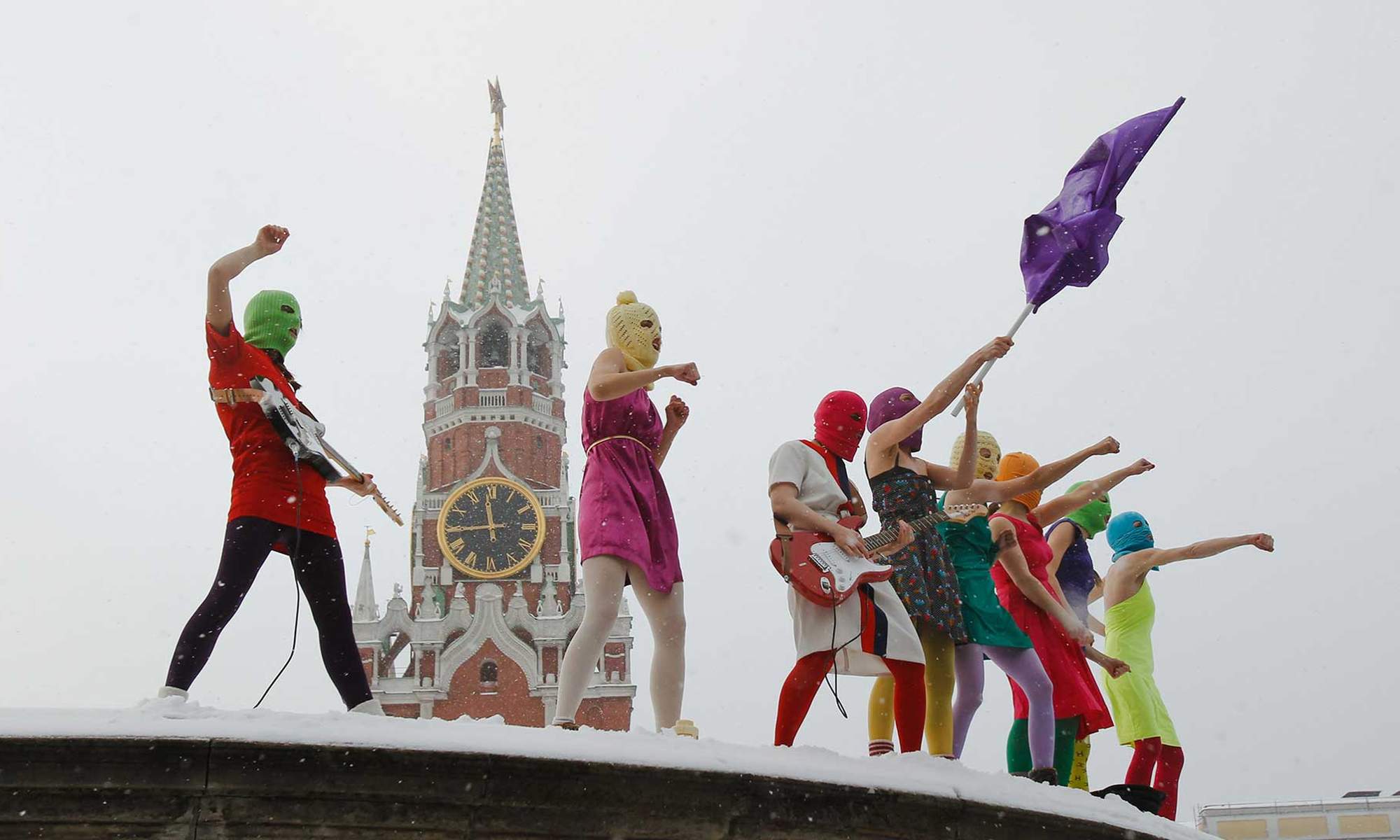
Pussy Riot’s “Eve of Destruction” is a politically charged song released in 2020 that takes its title from the iconic 1965 protest song by Barry McGuire. Pussy Riot, known for their provocative activism and feminist punk roots, reinterprets the song’s message to fit the modern political landscape.

In “Eve of Destruction,” they explore themes like authoritarianism, environmental degradation, and social injustice. The song draws from the intense atmosphere of global protests and movements, with the lyrics speaking to urgent issues like police violence, government oppression, and ecological crisis. Its tone is raw and confrontational, aligning with Pussy Riot’s characteristic style that merges music with activism.

The music video for the song is visually intense, with imagery that critiques political leaders and shows the chaotic state of the world. This modern rendition aims to resonate with a younger generation while maintaining the spirit of protest from McGuire’s original piece.

What do you think of this post?
  • Awesome (0)
  • Interesting (0)
  • Useful (0)
  • Boring (0)
  • Sucks (0)

How Putin Carried On…

Such a shame how he carries on with his war crimes:

Allegations of war crimes against Russian President Vladimir Putin and Russian military forces have emerged particularly in the context of the ongoing conflict in Ukraine, starting with the annexation of Crimea in 2014 and continuing with the full-scale invasion that began in February 2022. These allegations have been made by various governments, international organizations, and human rights groups. Here are key points and developments related to these accusations:

Allegations and Reports

  1. Civilian Casualties and Attacks on Civilian Infrastructure:
    • Reports of indiscriminate shelling and bombing of civilian areas, including hospitals, schools, and residential buildings, resulting in significant civilian casualties.
    • Specific incidents, such as the bombing of a maternity hospital in Mariupol and the missile strike on a shopping mall in Kremenchuk, have been highlighted as potential war crimes.
  2. Use of Prohibited Weapons:
    • Allegations of the use of cluster munitions and thermobaric weapons, which are prohibited under various international treaties due to their indiscriminate nature and severe impact on civilians.
  3. Forcible Transfers and Deportations:
    • Claims that Ukrainian civilians, including children, have been forcibly transferred to Russia or Russian-occupied territories, which could constitute a breach of international humanitarian law.
  4. Torture and Extrajudicial Killings:
    • Reports and evidence of torture, extrajudicial killings, and abuse of prisoners of war and detainees in areas occupied by Russian forces.

International Response

  1. Investigations by International Bodies:
    • The International Criminal Court (ICC) has opened an investigation into potential war crimes and crimes against humanity committed during the conflict in Ukraine.
    • The United Nations Human Rights Council has established a commission of inquiry to investigate alleged violations of human rights and international humanitarian law in Ukraine.
  2. Sanctions and Diplomatic Measures:
    • Numerous countries have imposed sanctions on Russian individuals and entities believed to be responsible for or complicit in war crimes.
    • Diplomatic efforts to isolate Russia on the international stage and calls for accountability from various international forums, including the United Nations General Assembly.
  3. Documentation and Advocacy by NGOs:
    • Human rights organizations, such as Human Rights Watch and Amnesty International, have been documenting alleged war crimes and advocating for accountability.
    • Ukrainian government and civil society groups have also been collecting evidence and testimonies to support legal actions against Russian perpetrators.

Legal Challenges

  1. Jurisdiction Issues:
    • One challenge is that Russia is not a party to the Rome Statute, which established the ICC, complicating the court’s jurisdiction over Russian nationals.
    • Universal jurisdiction and national courts in various countries might also pursue cases against individuals accused of war crimes.
  2. Political and Practical Obstacles:
    • The enforcement of international legal decisions and the apprehension of suspects remain significant hurdles, especially given Russia’s position and influence on the global stage.

Broader Implications

  • Humanitarian Impact: The ongoing conflict and alleged war crimes have led to a significant humanitarian crisis, with millions of Ukrainians displaced and in need of aid.
  • Geopolitical Consequences: The allegations and the broader conflict have strained international relations, leading to increased military, economic, and political tensions globally.

Efforts to hold Putin and Russian military leaders accountable for alleged war crimes continue, but the path to justice is fraught with legal, political, and logistical challenges.

What do you think of this post?
  • Awesome (0)
  • Interesting (0)
  • Useful (0)
  • Boring (0)
  • Sucks (0)