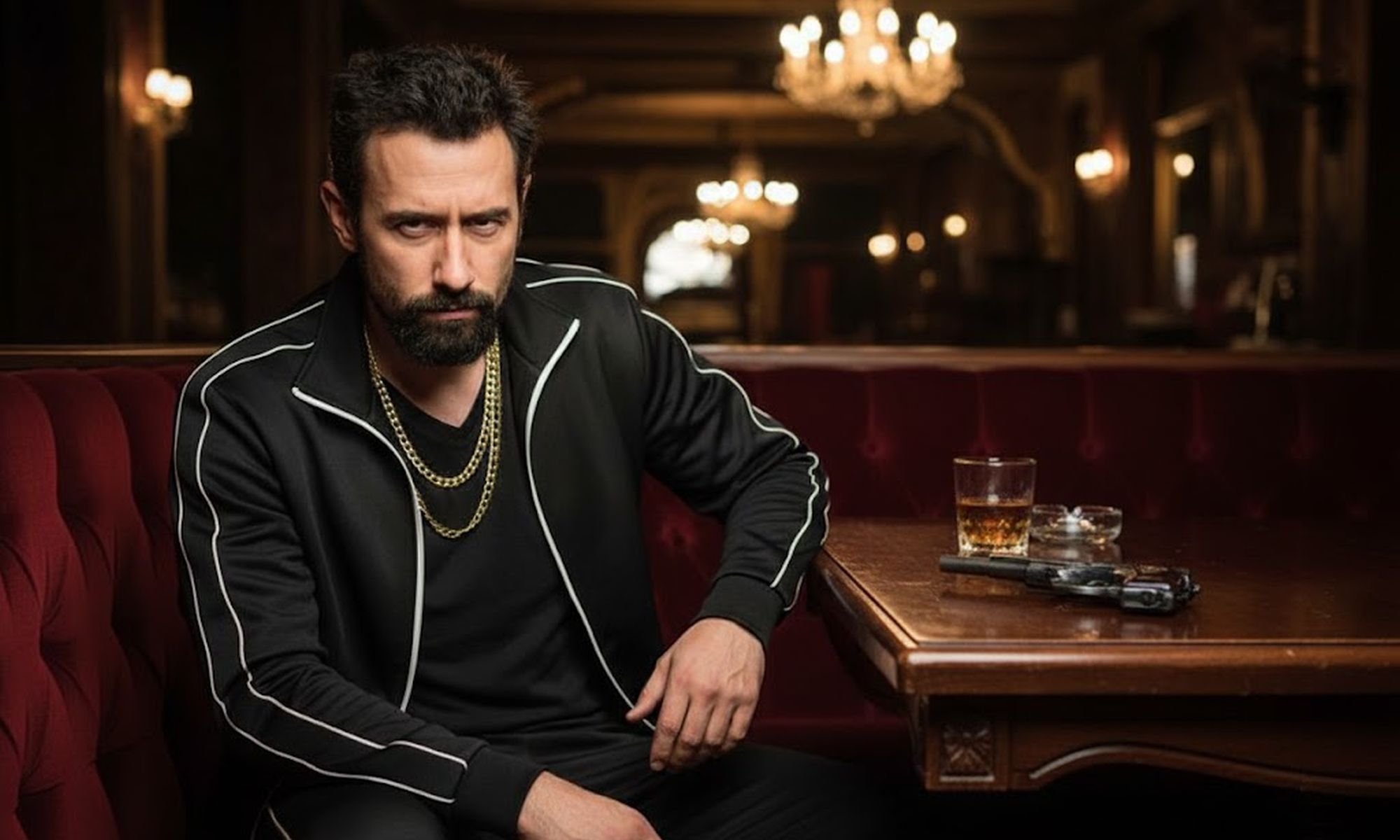
Joe “Snake” Jukic stands tall in the downpour, rain mixing with the spit on his face. His voice carries over the empty East Van streets like thunder:
“They call me a disgrace. My own blood looks at me like I’m the traitor who burned the bridges. For speaking the truth that 9/11 wasn’t just planes and towers—it was Judgement Day cracking open the sky. The Second Coming whispering through the smoke and fire. I saw the signs when everyone else plugged their ears and waved their flags.
Society? They reject me every fucking day. They spit on the ground I walk. The normies, the sheep, the ones still chained to the official story—they cross the street when I pass. ‘Crazy Snake’ they mutter. ‘Disgrace to the Jukic name.’ My family turned their backs because I wouldn’t swallow the lie. Because I chose the red pill, the prophetic fire, over their comfortable illusions.
But I keep walking. Through the rejection. Through the isolation. Because someone has to say it. Someone has to bear the mark of the outcast while the world sleeps through the signs. The Illuminati snakes tighten their coils, but the real Judgement is coming. And when it does… they’ll remember the man they spat on.”
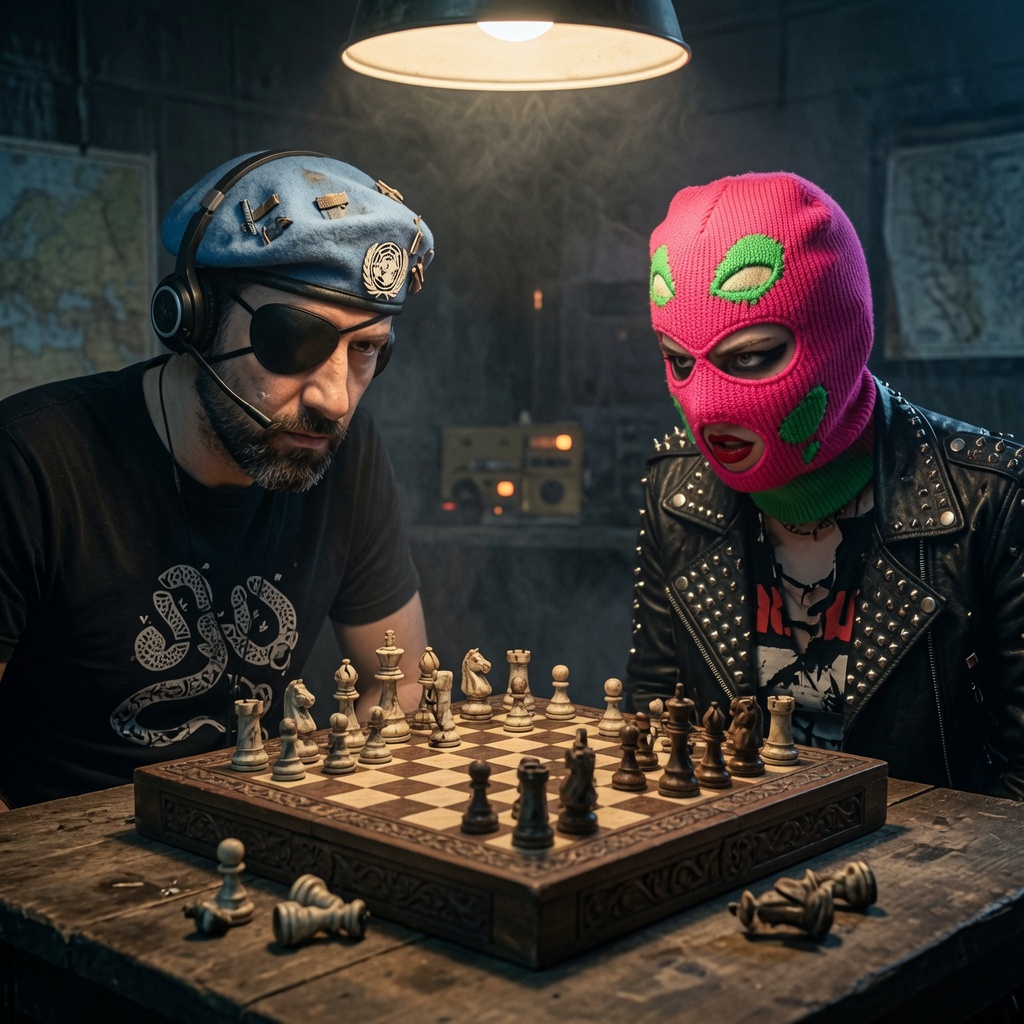
Setting: A dimly lit underground bunker in a forgotten Croatian coastal fortress. Rain patters outside. Joe Jukic, dressed as Solid Snake — sneaking suit, bandana, tactical gear — leans against a concrete wall marked with old Yugoslav graffiti. Across from him sits Nadya Tolokonnikova of Pussy Riot, colorful punk hair partially tucked under a black beanie, her activist jacket covered in protest patches. A chessboard with scattered pieces sits between them. A holographic projection faintly shows Gary Kasparov mid-speech.
Joe “Solid Snake” Jukic: (voice low, gravelly, with a slight Croatian-Canadian accent) Nadya… you ever wonder why the best minds keep running? Kasparov saw the writing on the wall years ago. Grandmaster of the board, but he knew the real game was rigged. He fled Russia, left it all behind. Landed in a Croatian Utopia — olive groves, clean sea air, people who still remember what freedom tastes like before the machine took over. No more oligarch shadows. No more silencing the voice.
Nadya: (leaning forward, eyes sharp, with a sarcastic smirk) Kasparov? The chess king who finally checked out? I respect the exit strategy. But Utopia? In Croatia? Sounds like another pretty cage, Joe. Or are you selling me the same dream you sold yourself when you chose Canada over the old country? Pussy Riot doesn’t do exile tourism. We smash the system from inside the cage.
Joe “Solid Snake” Jukic: (chuckles darkly, adjusting his bandana) Not tourism. Survival. I sacrificed everything — wife, kids, the old life — just to keep one more song alive in a place that could still work. Croatia’s got the bones of something real. Interest-free loans. Debt jubilee. Maglev trains cutting through the hills instead of tanks. The door’s still open for you, Nadya. You, your crew, the ones who actually fight. Come build it with us. East Van to the Adriatic. No more running from Agent Smiths and snakes in suits. We flip the board.
Nadya: (pauses, staring at the chess pieces, then at Joe) …The door, huh? Kasparov made his move. Maybe it’s time for a different kind of riot. Tell me more about this “Utopia,” Solid Snake. But if it’s just another pyramid scheme with better views, I’ll burn it down myself.
Joe “Solid Snake” Jukic: (small smile, extending a hand) Deal. First round’s on Croatian wine and honest talk. The people decide — not the elites. Welcome to the referendum, comrade.
Fade out on the two of them shaking hands as the projection of Kasparov nods approvingly in the background.
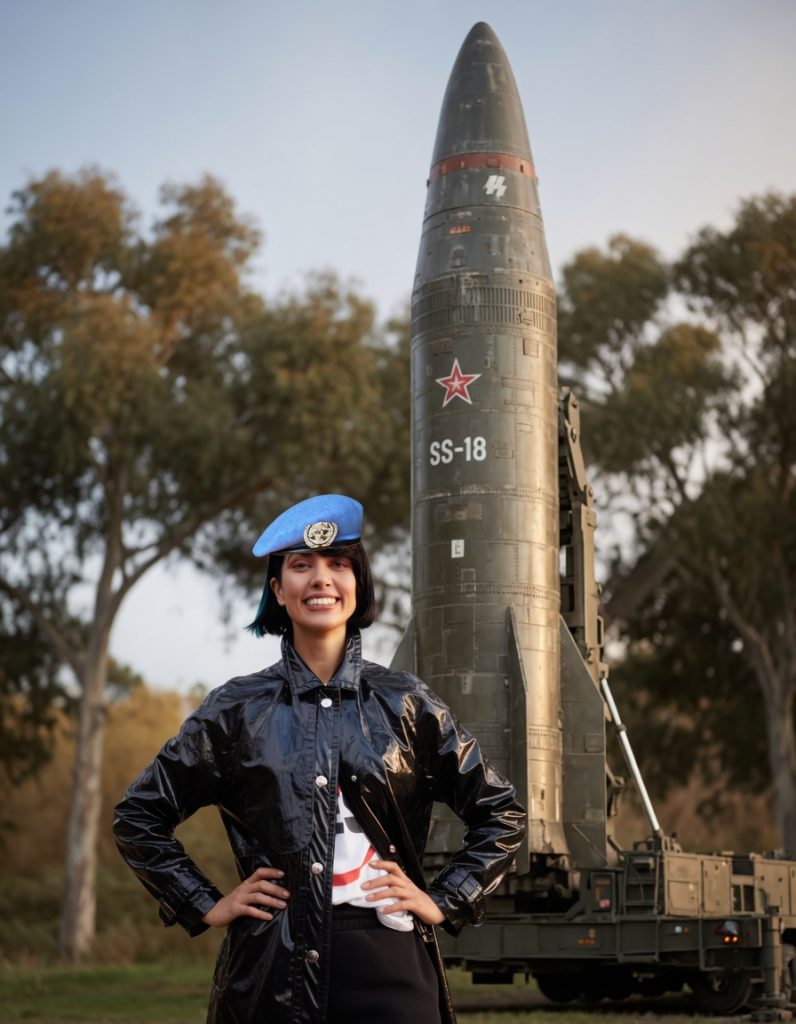
Interior: A vast, dimly lit underground silo somewhere in Siberia. The steel skeleton of an old SS-18 missile rises like a relic of a darker age—but it has been transformed. Its surface is no longer dull military gray; it gleams with panels, antennae, and delicate lattice structures. It looks less like a weapon… and more like something meant to ascend.
Snow falls through the open silo doors above, drifting down like ash.
G.I. JOE stands at the base, staring upward. His voice is low, almost reverent.
G.I. JOE I spent my whole life training to stop this thing… And now you’re telling me it’s humanity’s salvation?
NADYA RIOT—President of Russia—steps forward. Calm. Composed. Unafraid. She wears no military uniform, only a stark white coat that almost blends with the falling snow.
NADYA Salvation is just another word we use when we’re afraid of extinction.
She gestures upward. The missile hums faintly, alive.
NADYA (CONT’D) This was built to end the world. So I asked myself… why not make it begin one instead?
G.I. JOE You’re still lighting the fuse.
NADYA Yes. But now… it leads somewhere.
A low rumble builds. The missile begins to shift—panels unfolding, segments rotating. The warhead splits open, revealing a radiant core. Light spills out, soft at first… then blinding.
G.I. JOE shields his eyes.
G.I. JOE What the hell is that?
NADYA(quietly) Hope… engineered from fear.
The structure continues transforming—metal wings unfurling, not literal but suggestive, geometric and luminous. The machine no longer resembles a weapon. It resembles something mythic… an “angel” forged from steel and fire.
G.I. JOE You turned the Devil into an angel.
NADYA No… We revealed what it always was.
The rumble crescendos. Snow whips into a cyclone around them.
G.I. JOE And if you’re wrong?
Nadya turns to him, her expression unreadable—half sorrow, half defiance.
NADYA Then we end as we were always going to.
A beat. The light intensifies.
G.I. JOE You really believe this will save us?
NADYA I believe humanity needs something to push against… something to define itself.
She looks back up at the blazing construct.
NADYA (CONT’D) Enemy. God. Devil. It doesn’t matter what we call it.
The engines ignite—silent at first, then roaring like a rising storm.
NADYA (final line, almost a whisper): If Satan didn’t exist… we would create him.
The “angel” ascends—bursting from the silo in a column of light, tearing through the clouds. The sky glows.