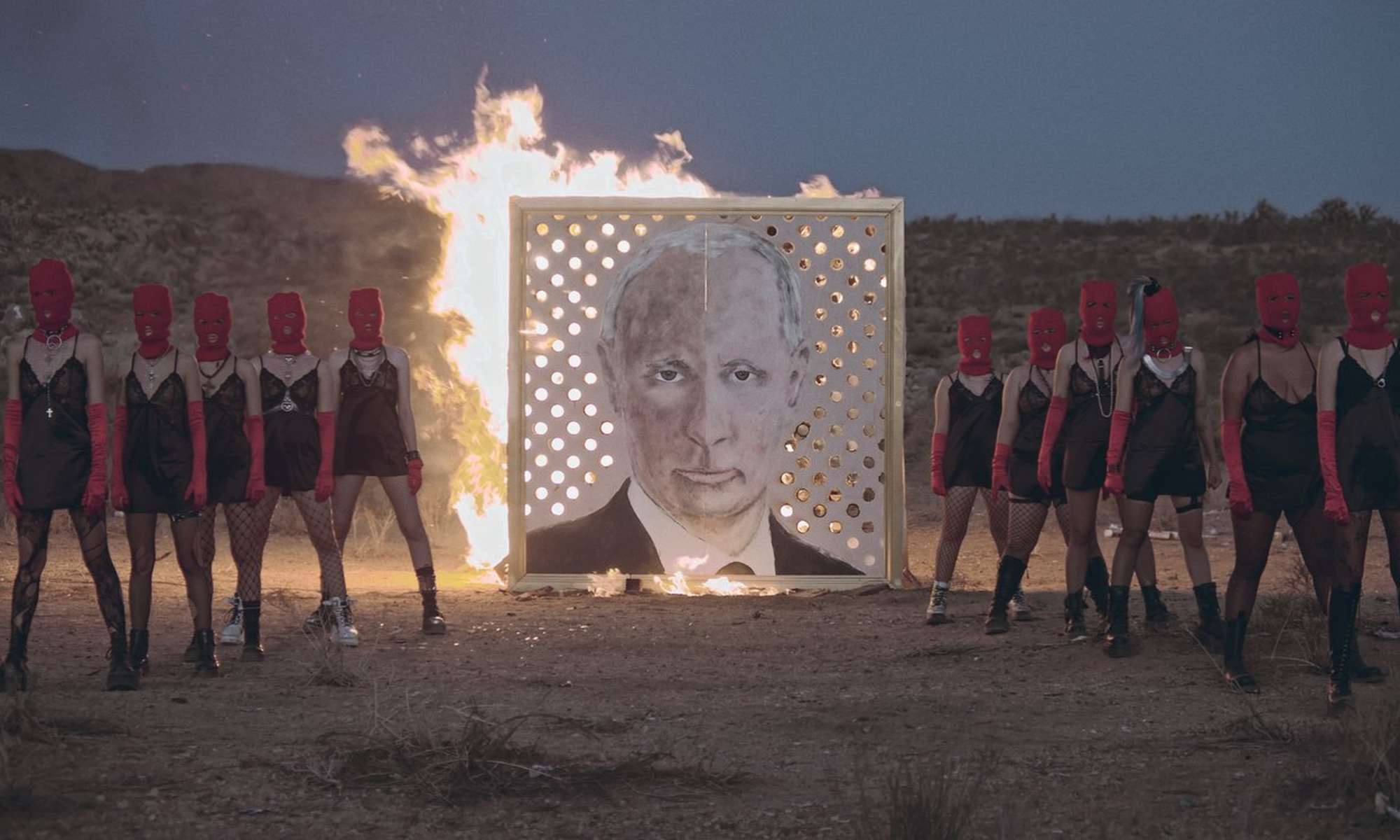
UN Binding Resolution

Solid Snake x Nadya Riot — UN Blue Helmets in the Snow

[Somewhere cold. A safehouse with cracked windows. Snow hisses against the glass. A blue UN armband lies on the table.]

Solid Snake:
So… UN-monitored election. Ballot boxes instead of bullets. That’s new.

Nadya Riot:
Don’t get sentimental, Snake. Bullets are still invited. They’re just waiting outside, smoking.

Snake:
Figures. Power never leaves quietly. It pretends it’s democratic while hiding a knife under the table.

Nadya:
Putin built a system where the table is the knife. Courts, media, security—stacked like nesting dolls. You open one, there’s another inside.

Snake:
That’s why the UN’s here. Observers, peacekeepers, cameras everywhere. Sunlight makes cockroaches nervous.

Nadya (smirks):
Unless the cockroaches own the power grid.

Snake:
Fair point. Still—monitors change the math. You can’t fake turnout when the world’s counting heads instead of slogans.

Nadya:
People are scared. They whisper in voting booths like God is bugged. Years of fear don’t evaporate because someone wears a blue helmet.

Snake:
Fear’s a weapon. But it dulls with use. Eventually people realize it’s heavier than freedom.

Nadya:
You sound like you believe this could actually work.

Snake:
I’ve seen worse odds. Shadow wars. Nuclear brinkmanship. AI colonels making kill lists.
An honest vote? That’s almost quaint.

Nadya:
Quaint gets you killed here.

Snake:
So does doing nothing.

[A distant helicopter thumps. UN markings flash past the window.]

Nadya:
They say the election is about stability. About “continuity.”

Snake:
Every strongman loves that word. Stability—for them.
Democracy’s unstable. It argues. It changes its mind. That’s the point.

Nadya:
If he loses, he won’t just walk away.

Snake:
No. But he won’t be able to disappear the loss either. Not with witnesses. Not with receipts.

Nadya:
And if he wins?

Snake:
Then at least the question was asked out loud. Sometimes the first victory is forcing the truth into daylight.

Nadya (quiet):
People are lining up already. Old women. Students. Factory guys who’ve never voted before.
They’re shaking—but they’re showing up.

Snake:
That’s the real battlefield. Courage beats propaganda every time. It just takes longer.

Nadya:
You staying through election day?

Snake:
Yeah. Someone has to make sure the lights stay on… and the boxes don’t walk away.

Nadya (half-smile):
Welcome to democracy, Snake. It’s messy. Loud. And fragile as glass.

Snake:
Glass can cut.

[They share a look. Outside, the snow keeps falling—but people keep lining up.]

What do you think of this post?
  • Awesome (0)
  • Interesting (0)
  • Useful (0)
  • Boring (0)
  • Sucks (0)

Belgians In the Congo

King Leopold II of Belgium ruled the Congo Free State from 1885 to 1908, and his reign is marked by extreme brutality and exploitation. Here’s a detailed overview of his involvement in the Congo:

Acquisition of the Congo

  • Berlin Conference (1884-1885): King Leopold II secured international recognition of his personal control over the Congo during this conference, which regulated European colonization and trade in Africa.
  • Congo Free State: Unlike other colonies, the Congo was not a Belgian state colony but rather Leopold’s private property.

Exploitation and Brutality

  • Rubber and Ivory: The main economic activities involved the extraction of rubber and ivory. The demand for rubber, driven by the invention of the pneumatic tire, led to severe exploitation.
  • Forced Labor: The Congolese were forced into labor to harvest rubber and gather ivory. Failure to meet quotas often resulted in brutal punishment.
  • Atrocities: Widespread atrocities were committed, including mutilation, killings, and taking hostages. Reports documented that hands were cut off as proof that bullets had not been wasted, a method used to enforce terror and compliance.
  • Population Decline: It is estimated that the population of the Congo decreased by millions during Leopold’s rule due to the harsh conditions, violence, and diseases exacerbated by exploitation.

International Outcry and Reform

  • Casement Report (1904): British consul Roger Casement’s report on the abuses in the Congo brought international attention to the human rights violations.
  • E.D. Morel: A British journalist and activist, Morel campaigned against the atrocities, founding the Congo Reform Association.
  • Literary Works: Writers like Joseph Conrad (“Heart of Darkness”) and Mark Twain (“King Leopold’s Soliloquy”) criticized the exploitation and helped raise awareness.

Transfer to Belgium

  • Annexation (1908): Due to international pressure and domestic outcry in Belgium, the Belgian government took control of the Congo from Leopold, renaming it the Belgian Congo. This transfer marked the end of Leopold’s personal rule but did not immediately end the exploitation and mistreatment of the Congolese people.

Legacy

  • Long-term Impact: The exploitation and brutal practices under Leopold’s rule had long-lasting effects on the Congo’s social, economic, and political structures.
  • Modern Perspectives: Today, Leopold II’s legacy is widely condemned, and his rule is often cited as one of the most egregious examples of colonial exploitation and human rights abuses.

King Leopold II’s rule over the Congo Free State remains a stark reminder of the devastating impacts of colonialism and the lengths to which individuals and nations went for economic gain at the expense of human lives and dignity.

What do you think of this post?
  • Interesting (1)
  • Awesome (0)
  • Useful (0)
  • Boring (0)
  • Sucks (0)

Delirium: UNICEF

UNICEF stands for the United Nations International Children’s Emergency Fund. It is a United Nations agency that provides humanitarian and developmental assistance to children and mothers in developing countries. UNICEF works to improve the health, nutrition, education, and protection of children worldwide.

The future of children depends on various factors, including access to education, healthcare, economic opportunities, and a safe and supportive environment. With the right support and resources, children have the potential to thrive and contribute positively to society. However, there are also challenges that need to be addressed to ensure a bright future for children. These include poverty, conflict, discrimination, and lack of access to quality education and healthcare. It is important for governments, organizations, and communities to work together to create a better future for children by investing in their well-being and providing them with the opportunities they need to succeed. Ultimately, the future of children will be shaped by the actions we take today to prioritize their needs and ensure they have the support and resources they need to reach their full potential. By investing in children and prioritizing their well-being, we can create a better future for all.

What do you think of this post?
  • Awesome (0)
  • Interesting (0)
  • Useful (0)
  • Boring (0)
  • Sucks (0)