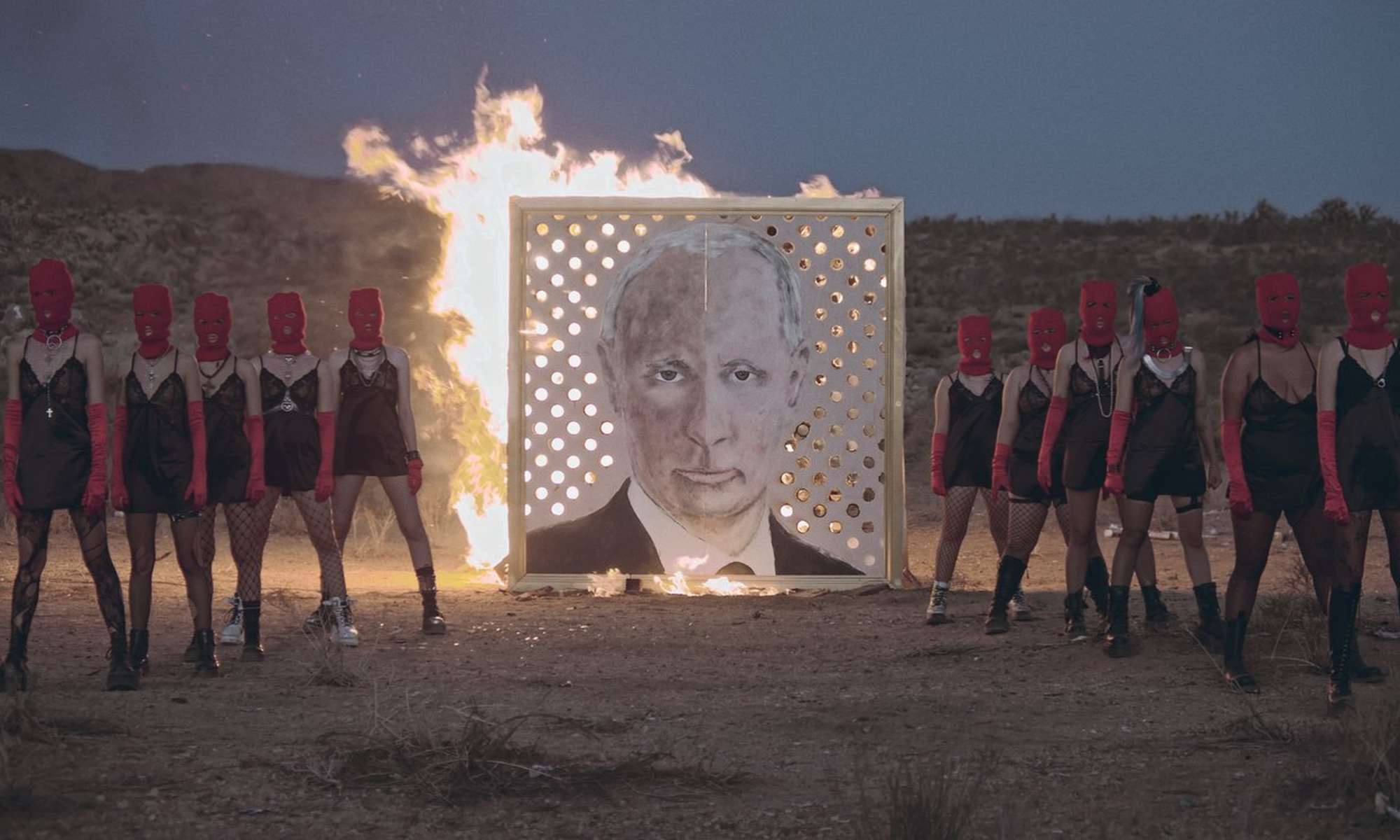
One Republic

INT. COFFEE SHOP – EVENING
The atmosphere is warm, a stark contrast to the heavy topic of conversation. G.I. Joe, in his crisp military jacket, sits across from Nadya, whose punk rock energy is unmistakable. She wears a bold t-shirt with a clenched fist graphic, sipping black coffee. The two share a mutual respect, though their paths to this table couldn’t be more different.

G.I. JOE
(leaning forward, his tone measured)
Nadya, I’ve been in enough war zones to know one thing: dictatorships and monarchies don’t work. Power concentrated in one person’s hands always leads to abuse.

NADYA
(nodding, her voice sharp and passionate)
Exactly. I’ve lived it. I’ve been jailed for singing about it. When one person or a small group controls everything, dissent becomes a crime.

G.I. JOE
(smiling faintly)
That’s why I believe in a republic. A system where power is distributed, checked, and balanced. The people elect their leaders, and no one’s above the law.

NADYA
(raising an eyebrow)
A republic sounds good on paper. But what happens when the people elect a tyrant? When the system is rigged before the first vote is cast?

G.I. JOE
(sitting back, thoughtful)
That’s where vigilance comes in. A republic isn’t perfect, but it’s adaptable. When the people stay engaged, when they hold their leaders accountable, the system works.

NADYA
(leaning forward, her voice intense)
But that’s the problem. Too many people give up. They think their voice doesn’t matter. In Russia, we’ve seen how apathy lets dictators thrive. How do you fight that?

G.I. JOE
(meeting her gaze)
Education. Transparency. Empowering local communities. When people understand their rights and see the impact of their choices, they’re less likely to let corruption take root.

NADYA
(nodding slowly)
I agree. But it’s also about culture. Art, music, protest—these are tools to wake people up, to show them what’s possible. That’s why Pussy Riot exists.

G.I. JOE
(grinning)
And that’s why I respect what you do. You fight with words and ideas. You remind people that freedom isn’t given—it’s taken, earned, defended.

NADYA
(smiling back)
And you remind me that sometimes, defending freedom means more than just words. It means action.

G.I. JOE
(raising his coffee cup)
To the republic. A government of the people, by the people, for the people.

NADYA
(clinking her cup against his)
To the people. And to never letting them forget their power.

The two share a moment of camaraderie, united by their shared belief in freedom, even as their methods differ. Outside, the city hums with life—a reminder of the world they’re fighting for.

What do you think of this post?
  • Awesome (0)
  • Interesting (0)
  • Useful (0)
  • Boring (0)
  • Sucks (0)

The Ashes of Power

The Ashes of Power: Putin, Revolution, and Divine Judgement

The streets of Moscow were aflame. Protesters surged through Red Square, their chants reverberating against the walls of the Kremlin. What had begun as murmurs of dissent had grown into a tidal wave of revolution, sweeping away decades of fear and silence. The gilded halls of power that Vladimir Putin once commanded with an iron grip now lay in ruins, the echoes of his reign drowned out by the roar of an angry populace.

Putin’s fall had been inevitable, though he had refused to see it. Like Colonel Muammar Gaddafi of Libya, Putin had dismissed the growing unrest, labeling it the work of foreign agents and traitors. But the people’s fury could not be silenced. Years of corruption, repression, and economic disparity had ignited into a violent uprising.

The Violent Revolution

The revolution had begun in the provinces, where food shortages and economic collapse were felt most acutely. Farmers, workers, and soldiers defected, joining forces with urban intellectuals and tech-savvy youth. The internet, once tightly controlled by the state, became a weapon of the resistance. Encrypted messages coordinated strikes, and viral videos exposed the regime’s atrocities.

In Moscow, the tipping point came when military units turned against the Kremlin. Tanks rolled into the capital, not to defend Putin, but to support the people. The once-loyal FSB fractured, with some operatives joining the uprising while others fled the country. The oligarchs, sensing the winds of change, abandoned their patron, retreating to their yachts and foreign mansions.

Putin himself had retreated to a bunker, issuing defiant speeches over state media, calling for loyalists to crush the rebellion. But his words fell on deaf ears. The revolutionaries stormed the Kremlin, dragging him from his hiding place. His final moments mirrored Gaddafi’s—surrounded by a mob, stripped of his power, and consumed by the rage of those he had oppressed.

The Ashes of Judgment

After his death, Putin’s body was cremated, but his ashes were not interred with the reverence of a statesman. Instead, they were scattered into the wind, a symbolic act of erasure. His name, once etched into history books, was now spoken only in curses.

And then came the Second Coming.

The skies darkened, and the earth trembled. Christ descended in glory, a vision of divine justice and mercy. The graves of the righteous opened, and the faithful rose to eternal life. But for the wicked, there was no such reprieve.

Putin’s ashes, scattered and insignificant, were summoned before the Throne of Judgment. The sins of his reign were laid bare: the corruption, the oppression, the wars waged for power and greed. His soul, if it still existed, quaked before the gaze of the Almighty.

But there was no redemption. The ashes were consumed in a divine fire, a final act of purification. Unlike the righteous who were resurrected to eternal life, Putin’s remains were obliterated, never to rise again.

Comparing Tyrants: Putin and Gaddafi

Like Gaddafi, Putin had ruled through fear, maintaining his grip on power with propaganda, secret police, and brutal crackdowns. Both men had amassed immense personal wealth while their people suffered. Both had dismissed the warnings of dissent, believing themselves untouchable.

Yet their downfalls were strikingly similar. Gaddafi had been dragged through the streets of Sirte, his body desecrated by those he had oppressed. Putin’s end was no less ignominious, his legacy torn apart by the very people he had sought to control.

The revolutions that toppled them were born of desperation and rage, but they were also acts of hope—hope for a future free from tyranny.

A New Beginning?

As the flames of revolution burned across Russia, the people began the arduous task of rebuilding. The scars of Putin’s reign would not heal easily, and the specter of authoritarianism loomed large. But the revolution had proven one thing: no ruler, no matter how powerful, could escape the judgment of history—or of God.

In the end, Putin’s ashes served as a reminder of the fate that awaits all tyrants: to be swept away by the tides of justice, their power reduced to nothing.

What do you think of this post?
  • Awesome (0)
  • Interesting (0)
  • Useful (0)
  • Boring (0)
  • Sucks (0)

The Dandelion Revolution

The cold air of Moscow buzzed with quiet anticipation. It was the first day of spring, and the city’s parks, still dusted with patches of snow, began to show signs of life. Yellow dandelions, stubborn and vibrant, pushed through cracks in the concrete. To the government, they were weeds. To the people, they were hope.

At the heart of the movement was Pussy Riot, the punk rock collective turned revolutionaries. For years, their protests had been dismissed as fringe art, their members jailed, beaten, and silenced. But their resilience inspired a generation disillusioned by Vladimir Putin’s iron grip. Now, they were ready to turn their defiance into a full-blown revolution.

The plan was simple yet bold. On May Day, as the government prepared for its annual display of military power, Pussy Riot would stage a massive counter-demonstration in Red Square. Instead of guns and tanks, they would arm themselves with music, art, and dandelions—a symbol of the people’s endurance.

Nadya Tolokonnikova, the group’s charismatic leader, addressed the crowd gathered in a hidden warehouse on the outskirts of the city. “The dandelion grows where nothing else can,” she said, holding up a fistful of the yellow flowers. “It cannot be eradicated. Just like us.”

As the day arrived, the streets filled with thousands of people wearing yellow scarves and carrying bouquets of dandelions. They moved as one, chanting Pussy Riot’s anthems, their voices echoing off the Kremlin walls. The government, caught off guard by the sheer size and unity of the movement, scrambled to respond.

At the center of the square, Pussy Riot performed atop a makeshift stage. Their song, “Dandelion Rebellion,” electrified the crowd. Each verse was a call to action, a reminder that power belonged to the people. As the chorus swelled, dandelions were tossed into the air, their seeds scattering like tiny parachutes of resistance.

The riot police arrived, but something unexpected happened. Many of them, young and weary of the regime themselves, hesitated. A few even joined the crowd, taking off their helmets and holding dandelions in solidarity. The revolution’s momentum became unstoppable.

By nightfall, Putin had fled the Kremlin. His departure was as quiet as his rule had been loud. In his absence, a provisional council formed, with Pussy Riot at its heart. Their first decree: dismantle the mechanisms of oppression and begin the work of rebuilding a free and democratic Russia.

The next morning, Moscow woke to a new world. The streets, once gray and lifeless, were now covered in a sea of yellow dandelions. The people, like the flowers, were resilient. And though the road ahead was uncertain, one thing was clear: the Dandelion Revolution had bloomed.

What do you think of this post?
  • Awesome (0)
  • Interesting (0)
  • Useful (0)
  • Boring (0)
  • Sucks (0)