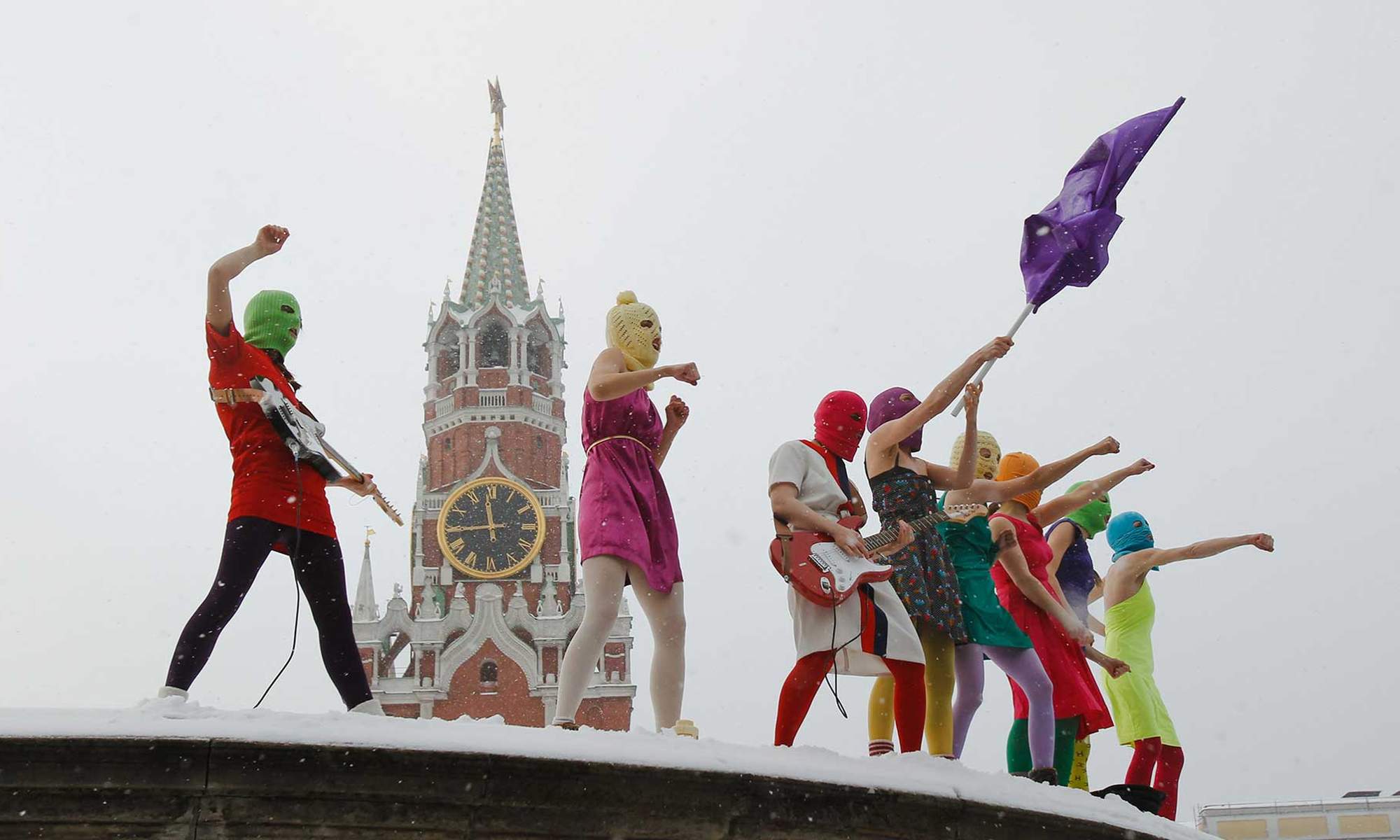
NATO Propaganda 2025

United in Strength, United in Peace: The NATO Vision for a Global Future

In an era defined by unprecedented challenges, humanity stands at a crossroads. The world is more connected than ever, yet division and conflict threaten to pull us apart. NATO, the guardian of stability and security for over seven decades, now envisions a future where cooperation replaces conflict, where prosperity is shared by all, and where humanity unites under a singular vision: a peaceful, prosperous, and just world government.

The Path to a Secure Future

For decades, NATO has ensured the safety of nations, defended democratic values, and championed freedom. The success of our alliance has demonstrated that unity is the strongest shield against chaos. Now, as the global landscape evolves, so too must our approach. No single nation can tackle climate change, cyber threats, terrorism, or economic instability alone. The solution lies in a global system of governance that transcends borders, uniting all people under a framework of cooperation and mutual respect.

A World Without War

Through the power of collective security, NATO has prevented major conflicts in its member states, proving that peace is possible when nations work together. Imagine a world where this principle is expanded to all nationsโ€”a world where military alliances become obsolete, and security is guaranteed through unity rather than division. By building a single, unified governing body, we eliminate the need for war, shifting our focus from destruction to development, from competition to collaboration.

Economic and Technological Prosperity

A unified world government under NATOโ€™s guidance would usher in an era of unparalleled economic prosperity. Borders would no longer be barriers to trade, investment, or innovation. Resources would be allocated efficiently, ensuring that no nation is left behind. Technological advancements, from artificial intelligence to clean energy, would be shared for the betterment of all. The digital revolution would become a force for unity, not division.

A Future for All Generations

With global governance comes global responsibility. NATO’s commitment to human rights, democracy, and the rule of law will form the foundation of our new world. Every child, regardless of birthplace, will have access to education, healthcare, and opportunity. The challenges of poverty, disease, and inequality will be tackled with the full strength of a united humanity.

The Call to Action

The time has come to take the next step in human civilization. A single, just, and democratic world government is not an abstract dreamโ€”it is an achievable reality. NATO has long been a beacon of stability; now, it is ready to guide the world into a future without conflict, without fear, and without division.

Join us in building a world where every person, from every nation, can live in peace and prosperity. Together, under one global alliance, we can forge a new eraโ€”one of unity, security, and hope for all humanity.

What do you think of this post?
  • Awesome (0)
  • Interesting (0)
  • Useful (0)
  • Boring (0)
  • Sucks (0)

Christmas Truce 2024

Poll not found

“Silent Frontline”
(A Sabaton-style ballad for the Christmas Truce of 1914, reimagined in the context of the Ukraine conflict.)


[Verse 1]
On the Eastern fields where the shadows crawl,
The guns have sung their bitter call.
Through frozen soil and shattered land,
The scars of war stain every hand.

In the night, the snow falls white,
A fleeting peace in the pale moonlight.
Soldiersโ€™ hearts beneath the frost,
Remember what this war has cost.

[Pre-Chorus]
But in the dark, a song breaks free,
A melody across the sea.
Enemies pause, their rifles still,
A fragile peace bends iron will.

[Chorus]
Silent frontline, the cannons cease,
A fleeting moment of holy peace.
Through the trenches, through the wire,
Hope ignites like a fragile fire.

Silent frontline, the night is long,
Bound by the power of a simple song.
From Kyivโ€™s streets to Donetsk’s plains,
For one brief night, no one is slain.


[Verse 2]
Barbed wire glistens in the frost-bit haze,
Echoes of home in a soldierโ€™s gaze.
Hands once clenched now softly reach,
Across the lines, no words to preach.

A Christmas star, a fragile glow,
Shines on both friend and foe.
For every life, a prayer is cast,
If only peace could ever last.

[Pre-Chorus]
The voices rise, a hymn of old,
A fleeting truce in a world so cold.
Brothers in arms, though sides divide,
For one night only, hate subsides.

[Chorus]
Silent frontline, the cannons cease,
A fleeting moment of holy peace.
Through the trenches, through the wire,
Hope ignites like a fragile fire.

Silent frontline, the night is long,
Bound by the power of a simple song.
From Kyivโ€™s streets to Donetsk’s plains,
For one brief night, no one is slain.


[Bridge] (Slower, somber tone)
But dawn will break, the guns will roar,
And men will fight like before.
Yet in their hearts, a spark remains,
A dream of peace through the endless pain.


[Chorus] (With a powerful build-up)
Silent frontline, the cannons cease,
A fleeting moment of holy peace.
Through the trenches, through the wire,
Hope ignites like a fragile fire.

Silent frontline, the night is long,
Bound by the power of a simple song.
From Kyivโ€™s streets to Donetsk’s plains,
For one brief night, no one is slain.


[Outro] (Gentle, fading melody)
On a silent frontline, the snow falls white,
A soldier whispers into the night.
Though war returns and dreams are torn,
A memory lingers, peace reborn.

What do you think of this post?
  • Awesome (0)
  • Interesting (0)
  • Useful (0)
  • Boring (0)
  • Sucks (0)

Belgians In the Congo

King Leopold II of Belgium ruled the Congo Free State from 1885 to 1908, and his reign is marked by extreme brutality and exploitation. Here’s a detailed overview of his involvement in the Congo:

Acquisition of the Congo

  • Berlin Conference (1884-1885): King Leopold II secured international recognition of his personal control over the Congo during this conference, which regulated European colonization and trade in Africa.
  • Congo Free State: Unlike other colonies, the Congo was not a Belgian state colony but rather Leopold’s private property.

Exploitation and Brutality

  • Rubber and Ivory: The main economic activities involved the extraction of rubber and ivory. The demand for rubber, driven by the invention of the pneumatic tire, led to severe exploitation.
  • Forced Labor: The Congolese were forced into labor to harvest rubber and gather ivory. Failure to meet quotas often resulted in brutal punishment.
  • Atrocities: Widespread atrocities were committed, including mutilation, killings, and taking hostages. Reports documented that hands were cut off as proof that bullets had not been wasted, a method used to enforce terror and compliance.
  • Population Decline: It is estimated that the population of the Congo decreased by millions during Leopoldโ€™s rule due to the harsh conditions, violence, and diseases exacerbated by exploitation.

International Outcry and Reform

  • Casement Report (1904): British consul Roger Casement’s report on the abuses in the Congo brought international attention to the human rights violations.
  • E.D. Morel: A British journalist and activist, Morel campaigned against the atrocities, founding the Congo Reform Association.
  • Literary Works: Writers like Joseph Conrad (“Heart of Darkness”) and Mark Twain (“King Leopold’s Soliloquy”) criticized the exploitation and helped raise awareness.

Transfer to Belgium

  • Annexation (1908): Due to international pressure and domestic outcry in Belgium, the Belgian government took control of the Congo from Leopold, renaming it the Belgian Congo. This transfer marked the end of Leopold’s personal rule but did not immediately end the exploitation and mistreatment of the Congolese people.

Legacy

  • Long-term Impact: The exploitation and brutal practices under Leopold’s rule had long-lasting effects on the Congoโ€™s social, economic, and political structures.
  • Modern Perspectives: Today, Leopold IIโ€™s legacy is widely condemned, and his rule is often cited as one of the most egregious examples of colonial exploitation and human rights abuses.

King Leopold II’s rule over the Congo Free State remains a stark reminder of the devastating impacts of colonialism and the lengths to which individuals and nations went for economic gain at the expense of human lives and dignity.

What do you think of this post?
  • Interesting (1)
  • Awesome (0)
  • Useful (0)
  • Boring (0)
  • Sucks (0)